
Short answer
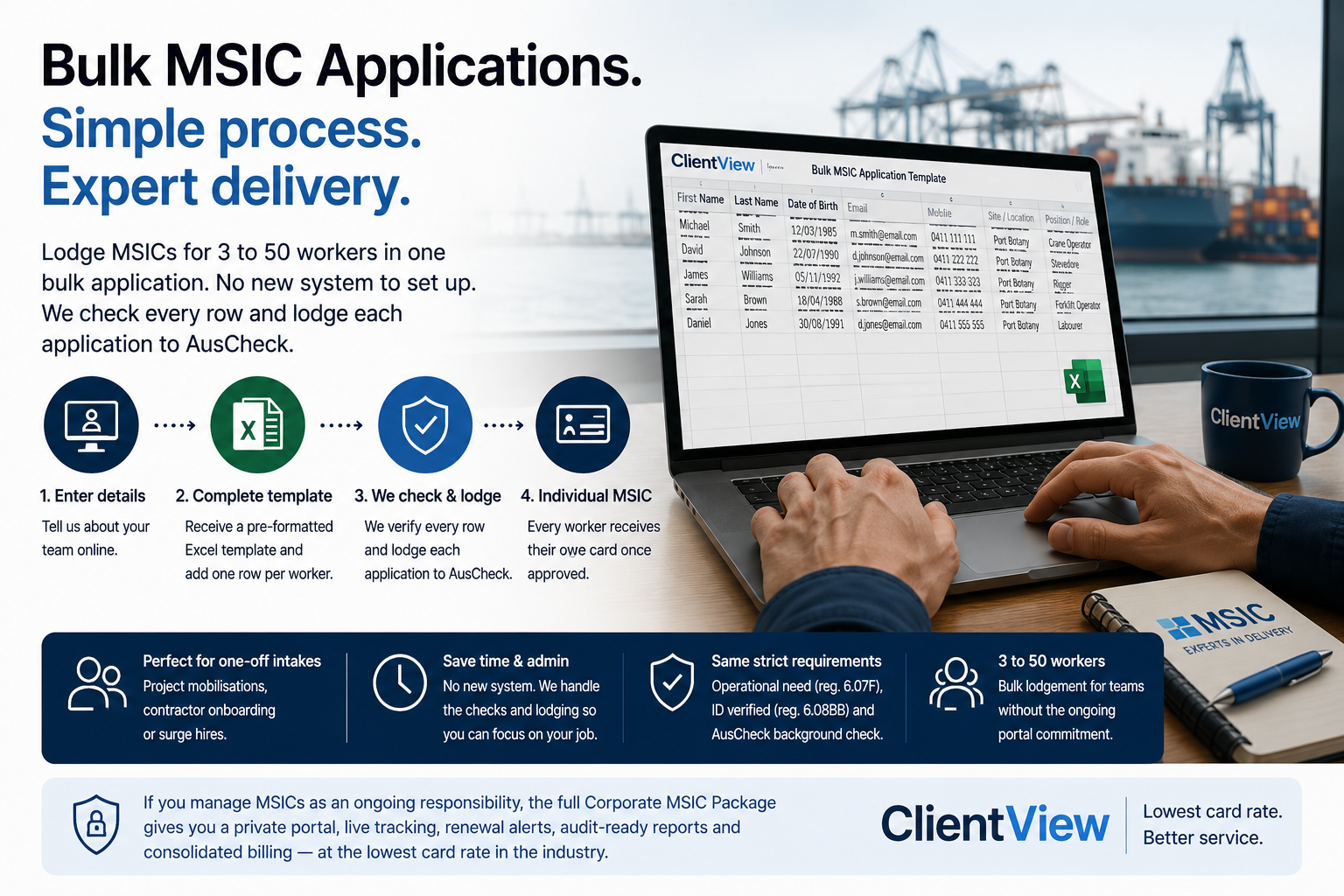
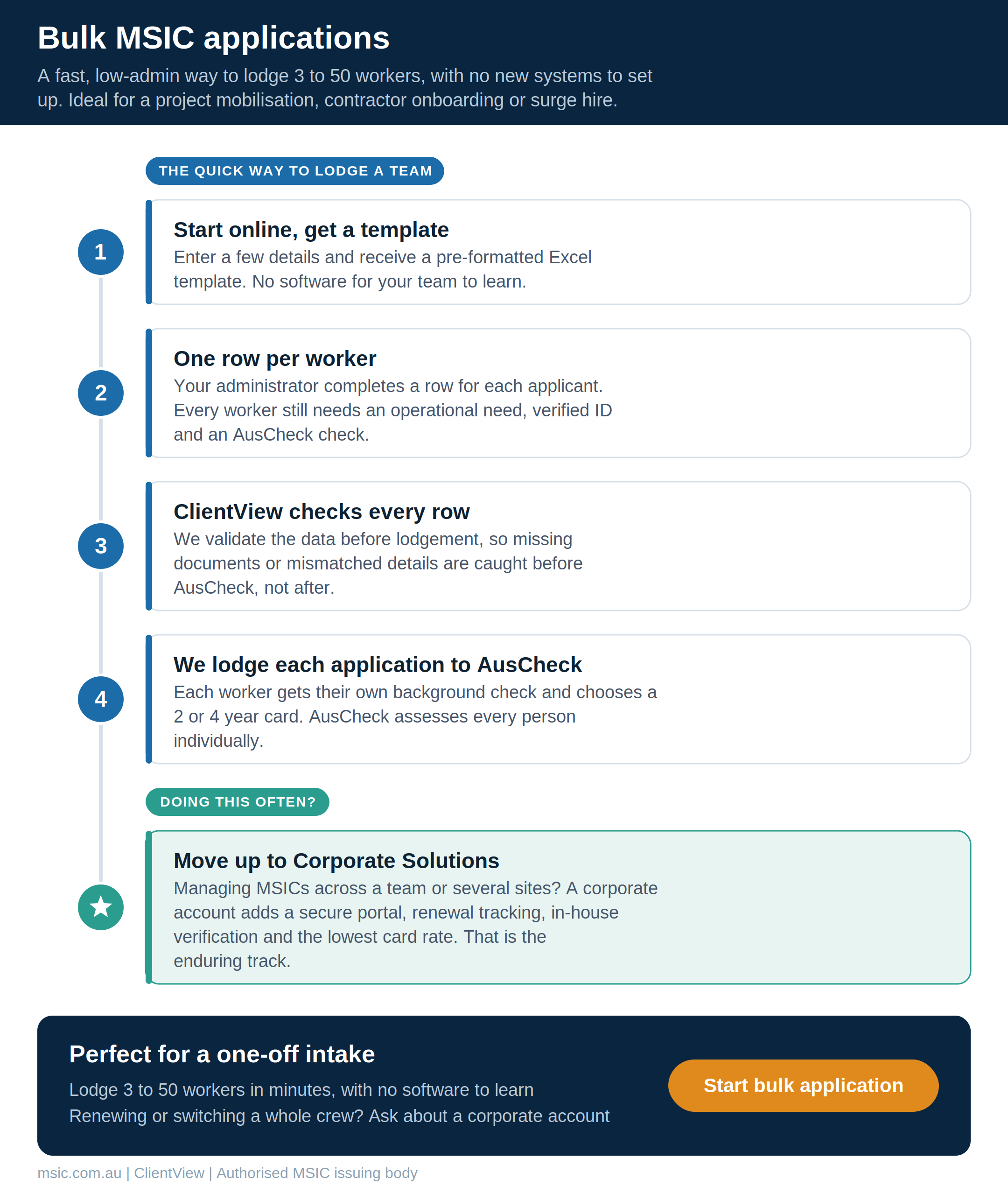
A bulk MSIC application is the fast, low-admin way for an employer to lodge Maritime Security Identification Cards for a team of three or more workers at once, with no new system to set up. You enter a few details online, receive a pre-formatted Excel template, complete one row per worker, and ClientView checks every row and lodges each application to AusCheck. Every worker still needs their own card and must meet the same requirements: an operational need for unmonitored access to a maritime security zone (r. 6.07F(1)), identity verified against original documents (regulation 6.08BB) and an AusCheck background check. It is ideal for a one-off intake such as a project mobilisation, contractor onboarding or surge hire. If you manage MSICs as an ongoing responsibility, the full corporate package is the better fit.
Who in your workforce needs an MSIC?
An MSIC is the nationally recognised card showing that the holder has passed a background check to work unmonitored in maritime security zones, the controlled areas within Australian ports, port facilities and offshore facilities. A worker has an operational need for a blue MSIC when their occupation requires unmonitored access to a maritime security zone at least once each year (r. 6.07F(1)). That typically covers stevedores, truck drivers servicing wharves, seafarers, offshore oil and gas crew, port services staff and many contractors. The card belongs to the worker, not the company, but employers usually organise and pay for the applications. Our guide to operational need for an MSIC explains who confirms it and how.
What each worker still needs, even in a bulk application
Lodging in bulk centralises the administration, not the eligibility. Every applicant must:
- have an operational need for unmonitored access to a maritime security zone (r. 6.07F(1))
- have their identity verified in person against original Category A, B and C documents, plus a Category D document where a current residential address is not otherwise shown (regulation 6.08BB)
- pass a background check conducted by AusCheck, which the issuing body applies for on the applicant's behalf (regulation 6.08BA)
Each applicant also chooses whether their card is in force for 2 or 4 years (regulation 6.08B). Applications are commonly held up by missing documents or mismatched personal details, and in a batch of 30 workers a small error rate still strands several people. This is where a managed provider earns its place: ClientView checks every row before lodgement, so avoidable errors are caught before they reach AusCheck rather than after.
How a bulk MSIC application works
A bulk application is built for quick intakes from three applicants up. You enter a few details online and receive clear instructions plus a pre-formatted Excel template. Your administrator completes one row per applicant, sends the spreadsheet back, and ClientView checks the data and lodges each application for its AusCheck background check promptly. There is no new system to set up and no software for your team to learn, which is why this route suits small and medium companies with a one-off or occasional need. You can begin a bulk MSIC application in minutes.
When to move up to the full corporate package
Bulk lodgement is perfect for a single intake. But if you manage MSICs on a rolling basis, across several sites, or you are tired of tracking cards on spreadsheets and email, a ClientView corporate account replaces the spreadsheet with a secure online portal, adds renewal tracking, workplace verifier training and consolidated billing, and runs the whole programme for you. Most employers with more than a handful of cards find it pays for itself in time saved. See the full corporate package for how it works, or read our guide to renewing your MSIC.
Frequently asked questions
Does lodging in bulk speed up individual approvals?
No. AusCheck assesses each person individually. Bulk lodgement reduces administration and data errors on your side, which prevents avoidable delays.
Can we mix employees, contractors and labour hire in one bulk application?
Yes. Every applicant faces the same identity, background check and operational need requirements.
How long does an MSIC last?
A blue MSIC is issued for 2 or 4 years and expires that many years after the last day of the month in which the background check was completed (regulation 6.08I).
We already have MSICs through another provider. Can we move to ClientView?
Yes. Current valid cards stay valid because the card belongs to the worker. For a whole workforce, the full corporate package imports your cardholders and sets renewal triggers so nothing lapses.
Ready to lodge a team? Start a bulk application, or if a mobilisation deadline is approaching, read our guide to getting your MSIC as fast as possible.
Source: Maritime Transport and Offshore Facilities Security Regulations 2003 (Cth), regulations 6.07F (operational need), 6.08BB (identity verification) and 6.08I (period of issue and expiry). This article is general information, not legal advice. Check current official sources at auscheck.gov.au. Last reviewed: July 2026.