
Short Answer
Five more Western Australian ports on this site, spread across the Pilbara, Kimberley and south coast, all take the same national MSIC. What differs is how each port authority controls access:
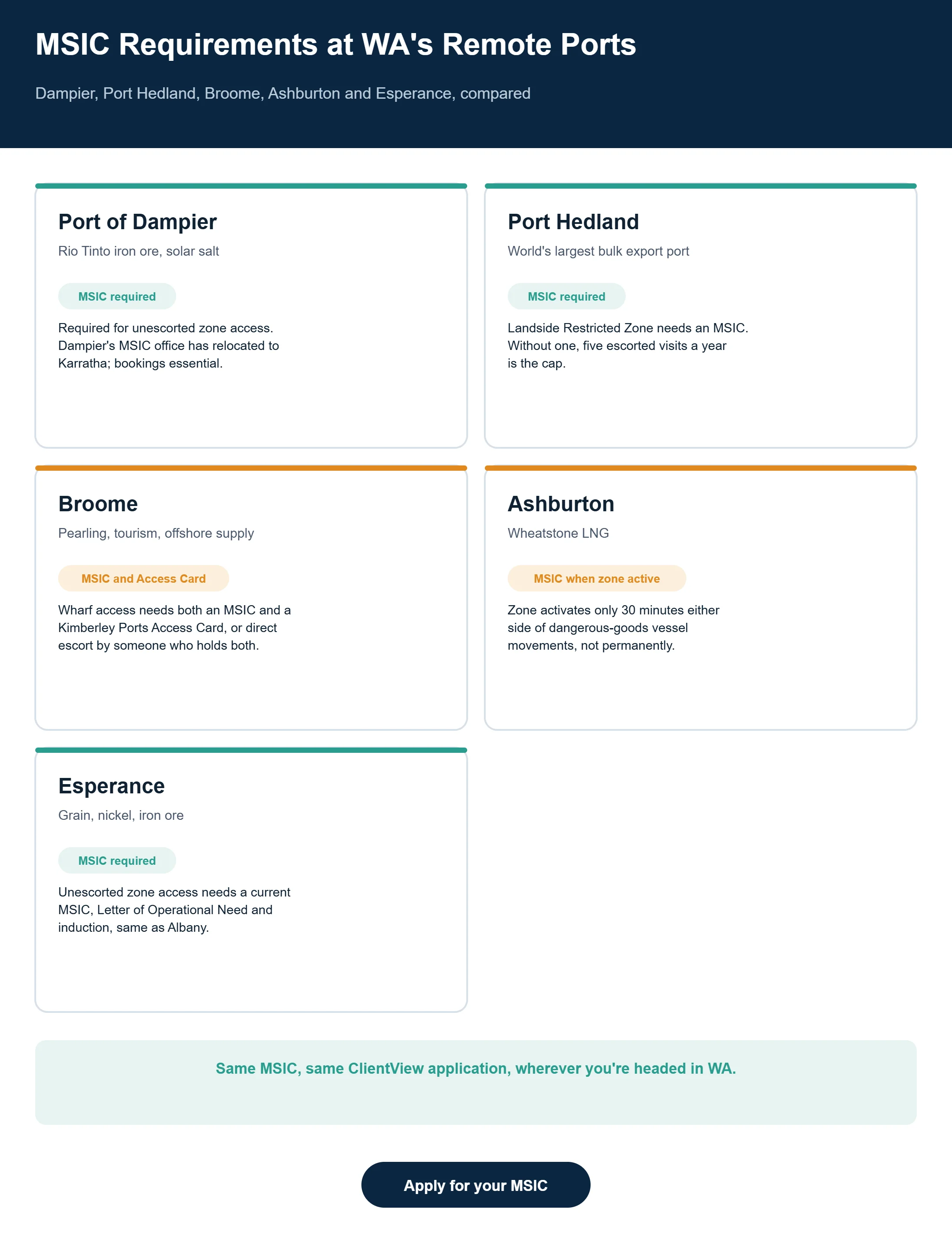
- Port of Dampier: MSIC required for unmonitored access to a maritime security zone. Pilbara Ports' Dampier office has relocated to Karratha.
- Port Hedland: MSIC required for Landside Restricted Zone access; without one, you're limited to five escorted visits a year.
- Broome: needs both an MSIC and a Kimberley Ports Authority Port Access Card for wharf access, or direct escort by someone who holds both.
- Ashburton: MSIC only required while the security zone is active, a window either side of dangerous-goods vessel movements, not permanently.
- Esperance: MSIC required for unmonitored zone access, plus a Letter of Operational Need and induction. A short-term escorted-only card exists but isn't a substitute.
Same card, same national scheme, same ClientView application, wherever you're headed. The detail below is about how each port controls the gate, not about whether your MSIC works there.
These five ports handle some of Australia's heaviest resource export volumes and its most remote port access arrangements: Rio Tinto iron ore and salt through Dampier, the world's largest bulk tonnage through Port Hedland, Kimberley pearling and offshore supply through Broome, Wheatstone LNG through Ashburton, and grain, nickel and iron ore through Esperance. All five sit on the same national MSIC scheme, run by AusCheck under the Maritime Transport and Offshore Facilities Security Act 2003, with local access rules layered on top by Pilbara Ports, Kimberley Ports Authority and Southern Ports respectively. This guide covers those five; see our companion piece, MSIC Requirements Across WA's Ports, for Fremantle, Bunbury, Albany and Geraldton.
One card, every WA port
An MSIC issued by any Australian Government authorised issuing body, ClientView included, is a national card. It doesn't need reissuing if your work moves between Dampier, Port Hedland, Broome, Ashburton, Esperance, or any other security regulated port in the country. What differs below is local: zone activation windows, escort limits, and whether a second card is needed alongside the MSIC.
Port of Dampier
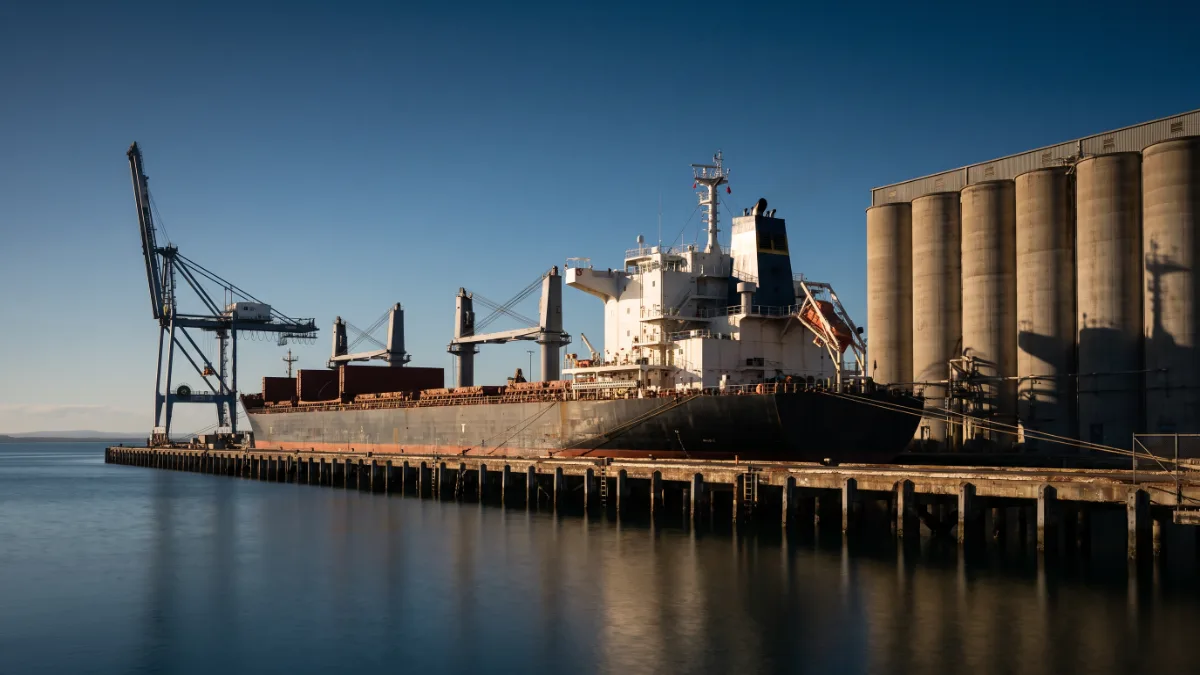
One of the world's largest bulk export ports, shipping Rio Tinto iron ore alongside solar salt and other bulk products from the heart of the Pilbara's resources supply chain, near Karratha. Pilbara Ports confirms an MSIC is required to work unescorted or unmonitored within a maritime security zone at Dampier, covering stevedores, marine pilots, tug and mooring crews, terminal maintenance workers and contractors. Pilbara Ports' dedicated Dampier MSIC office has relocated to Karratha (Level 1, 20 Sharpe Ave, The Quarter HQ); bookings are essential for an appointment. Rio Tinto's own terminals run separate site inductions on top of the card, and many roles are FIFO-based out of Karratha or Perth.
Port Hedland
The world's largest bulk export port by tonnage, where BHP, Fortescue and Roy Hill each operate dedicated iron ore export terminals shipping several hundred million tonnes a year. Pilbara Ports confirms Landside Restricted Zone access requires a current MSIC. Visitors without one must be continually escorted by someone who holds unrestricted access and an MSIC, and anyone without full site induction is limited to five escorted visits in a 12-month period (extensions can be requested from the Harbour Master or port security in exceptional circumstances). Each terminal operator runs its own separate induction on top of the card.
Broome
In the Kimberley, supporting pearling, tourism, livestock and offshore oil and gas supply traffic. Broome is the one port on this list where the MSIC isn't enough on its own: Kimberley Ports Authority states personnel won't be permitted onto the wharf unless they hold both a current MSIC and a Port Access Card, and anyone entering the maritime security zone must also declare an operational need. Those without both cards may still get on site under direct, continuous escort by someone who holds both, but frequent visitors are expected to obtain their own cards or risk losing access altogether.
Ashburton
Near Onslow in the Pilbara, primarily serving the Wheatstone LNG project and its offshore and supply base activity. Unlike the other four ports here, Ashburton's Land-side Restricted Zone, and the MSIC requirement that comes with it, isn't permanently in force: Pilbara Ports activates it only for a window starting 30 minutes before the arrival of a dangerous-goods security-regulated vessel and ending 30 minutes after it departs. Outside that window the zone isn't active, though a completed Pilbara Ports site induction is still needed for unrestricted port access regardless of zone status, and escorted visitors are capped at five visits in a 12-month period, the same limit as Port Hedland.
Esperance
On the south coast, exporting grain, nickel concentrate and iron ore through the Southern Ports terminal. Anyone who needs unmonitored access to Esperance's landside or waterside restricted zones must hold a current MSIC, a Letter of Operational Need and a completed induction, the same requirement Southern Ports applies at Albany. Its Supervised Access Worker card is a short-term alternative for escorted visits of up to five days under continuous MSIC-holder supervision; it isn't a substitute for holding your own MSIC. Southern Ports stopped issuing MSICs itself from 3 April 2025 and now directs applicants to lodge through an authorised issuing body's own online portal, while continuing to issue its own Access Cards. Any Australian Government authorised issuing body's MSIC, ClientView's included, is accepted at Southern Ports the same as anywhere else.
Applying once, for wherever the work takes you
If your work moves between two or more of these ports, or between WA's north and south, you only need the one card. Between 20 and 45 minutes online if you have your details to hand. Apply for your MSIC, verify your identity at a participating Australia Post outlet, and ClientView lodges every ready application with AusCheck each business day. See our measured processing times for how long that typically takes. For Fremantle, Bunbury, Albany and Geraldton, see our companion piece, MSIC Requirements Across WA's Ports.